Why Go Interdisciplinary? A CSCT Student Perspective
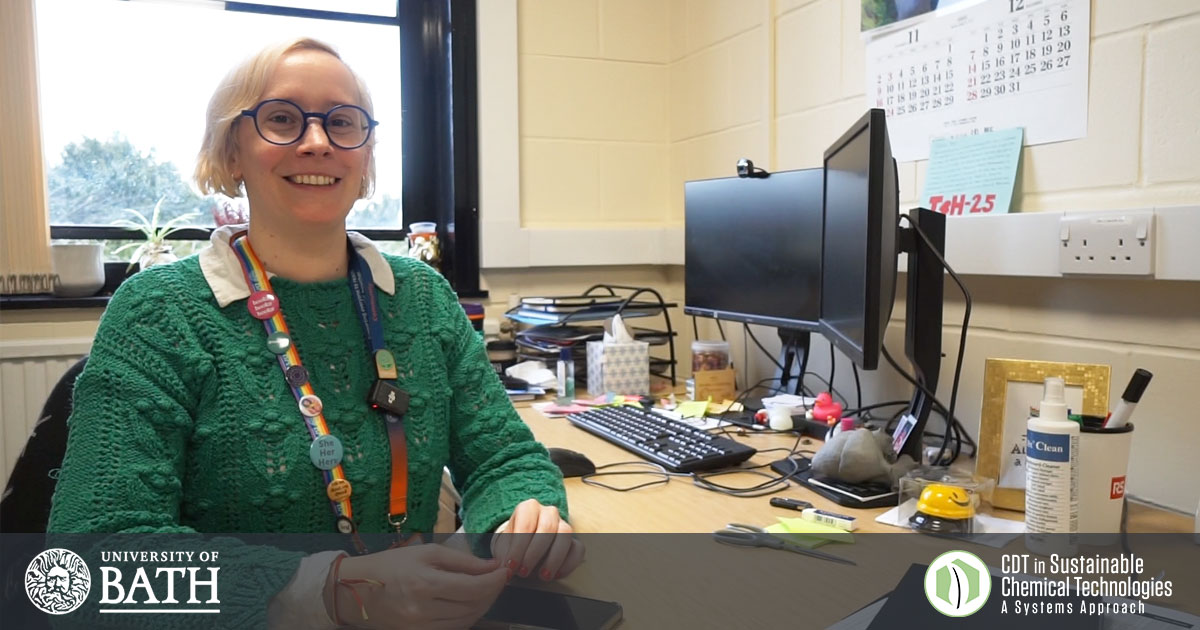
In the CDT for Sustainable Chemical Technologies (CSCT), interdisciplinarity is at the forefront of our research. As part of our MRes year, we are required to undertake two research projects, spanning two separate disciplines. This presents a unique opportunity to explore a topic that is completely different to your background. Here, I’m going to share some details about my projects, and my experiences doing interdisciplinary research.
MRes projects
Although my background is in organic chemistry, my first research project was in the department of Electronic and Electrical Engineering, with Dr Melusine Pigeon. Here, I explored Electrical and Electronic Equipment (EEE), and some of the environmental impacts around their production and disposal.
Simply put, EEE is found everywhere. The term encompasses small devices, such as a smartphone, to larger equipment, like a fridge. Although we’re surrounded by it, we still don’t really understand the environmental impacts these devices have. We looked at how some relevant materials are produced, and how some waste is treated, to start building a picture of some of the impacts around EEE and Waste Electrical and Electronic Equipment (WEEE).
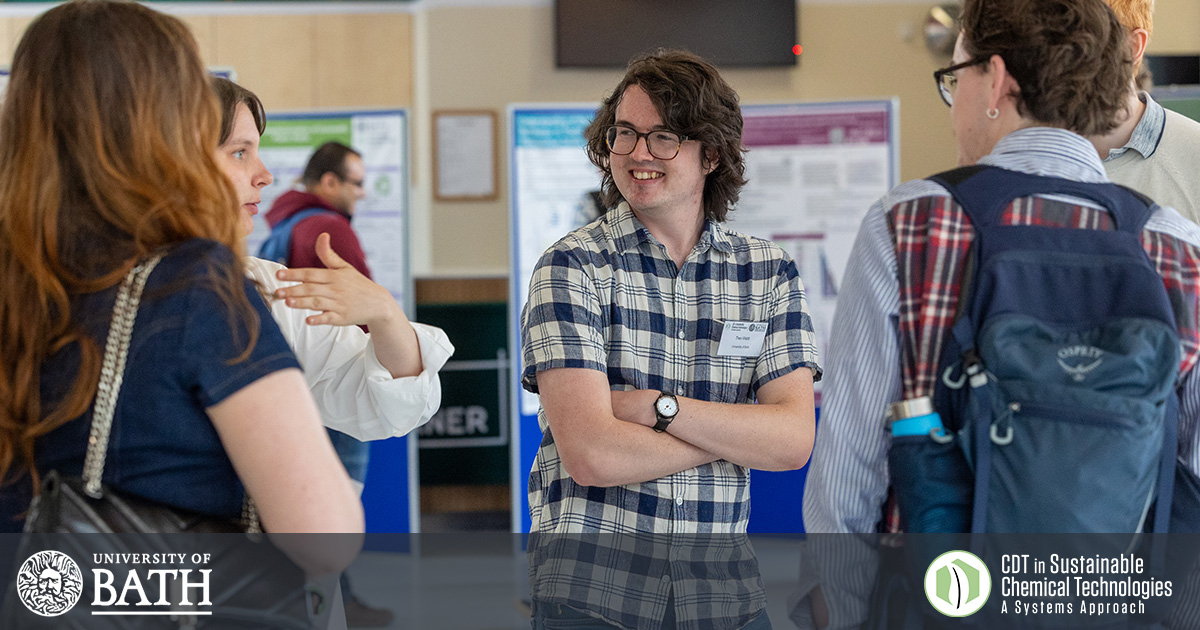
I’m sure it comes as no surprise that throwing yourself into a completely new area is a challenge – because it is! There was a significant learning curve when I first started, with a bunch of new ideas to try and get my head around. Similarly, starting in an interdisciplinary team, especially one based in an unfamiliar department, came with communication challenges. I quickly realised that the way I explain concepts would need to change in order to ensure that I was understood by everyone. This also helps when it comes to public engagement, or when giving a talk in front of an audience from a mixed background – the summer showcase is a great example of this!
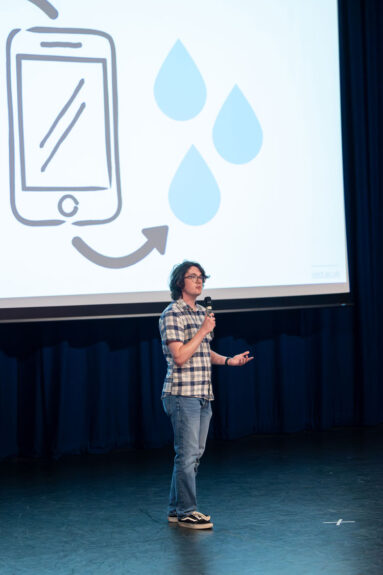
Having finished my first MRes project, I’ve moved back towards my background in chemistry. Currently, I’m exploring chemical plastic recycling using UV light. Essentially, we want to take plastics (polymers) and break them back to their simplest repeating unit (monomer), so that we can remake and reuse the material without losing the properties we want.
Although I’ve certainly missed being in the lab, my time researching environmental impacts has made me think about chemistry in new ways. For example, I’m now much more aware of the significant impacts background processes can have on the environmental footprint of a reaction, which helps to understand how “green” an overall process is. This interdisciplinary thinking has opened my eyes to how complex the problem of making chemistry green really is, and how important it is that there are researchers out there who are actively working on making some of these fundamental processes sustainable for not just us, but for future generations.
Outside the research
Interdisciplinary research is arguably the most important thing we do, but it isn’t the only thing. As part of this MRes year, we also undertook a variety of taught modules. These spanned topics such as life cycle assessment, AI and machine learning, and materials for a sustainable future. These give an insight to what research is actively being done, whilst exposing us to areas that we may find interesting but didn’t know existed. Overall, this training helps encourage exploration towards areas away from your background, and to consider interdisciplinarity when conducting our research.
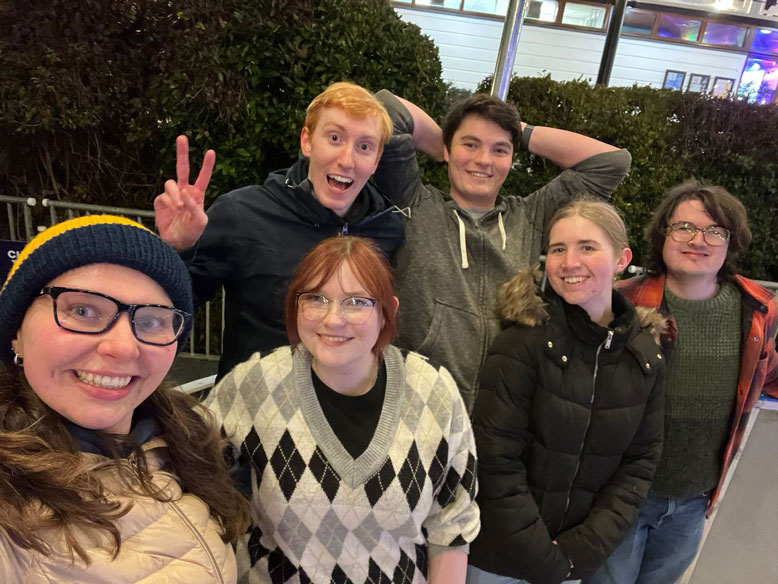
Although there is a focus on this background knowledge, soft skills aren’t ignored. We spent a week with the excellent Tom Pringle (aka Dr Bunhead), who helped us develop our public engagement skills, with lots of presenting (and games!) to help build our confidence. Coursework for taught parts of the course further help develop writing and related skills, which are imperative for a successful researcher. Finally, being part of a cohort helps build social skills, networking opportunities, and lasting friendships.
To Summarise
Although there are difficulties, interdisciplinary research is full of benefits. By including people from a range of backgrounds, you’re able to receive a bunch of different viewpoints on a problem. This can help you see approaches that you otherwise wouldn’t think of, enabling creative problem solving. Similarly, being in an interdisciplinary cohort means there’s almost always someone who’s studied what you’re stuck on before, and can help explain it.
A final thought – with problems such as climate change being so broadly damaging and impactful, only interdisciplinary research will be able to effectively bring about a sustainable future. And I, for one, am glad to say that my work is contributing.