

Health and Environment
The Health & Environment theme develops new molecules, materials and engineering approaches to address interconnected challenges in human health, environmental health and sustainability. Our research spans scales from molecules and cells to engineered systems, the environment and whole populations.
Key research areas within this theme

Catalysis

Synthesis

Bio

Reaction

Process
Research in practice
Exemplar projects
Our research addresses complex challenges at the interface of human health and the environment. Spanning areas from sustainable healthcare and drug discovery to environmental protection and resource efficiency, these projects demonstrate the breadth of research possible within the theme and the potential for engineering innovation to deliver meaningful real-world impact.
Project example
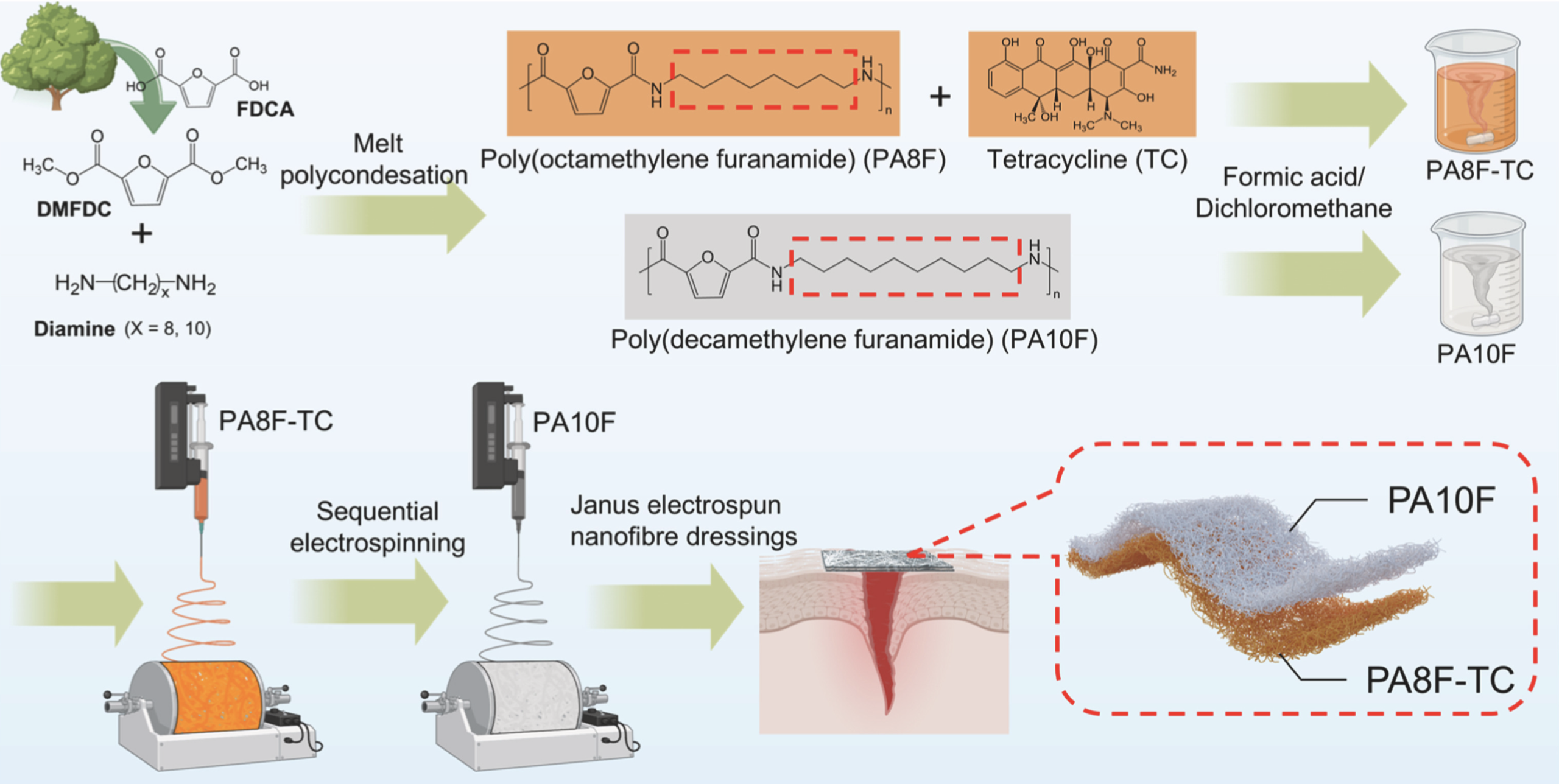
Sustainable Polyamides and Green Electrospinning for Health and Environmental Applications
Electrospun polymer fibres have applications ranging from healthcare materials to filtration and environmental technologies, but their manufacture can rely on hazardous solvents and pristine polymers. This project explores how sustainable polyamides, greener solvents and circular approaches to polymer use can be combined with electrospinning to… View project Close project
Electrospun polymer fibres have applications ranging from healthcare materials to filtration and environmental technologies, but their manufacture can rely on hazardous solvents and pristine polymers. This project explores how sustainable polyamides, greener solvents and circular approaches to polymer use can be combined with electrospinning to create high-performance functional fibrous materials with a reduced environmental footprint.
Recent research within the Materials for Health Lab demonstrates different routes towards this goal, including the development and processing of sustainable polyamide materials, the use of the bio-derived solvent Cyrene as a greener alternative for electrospinning, and the repurposing of laboratory plastic waste into functional fibrous materials. Together, these approaches demonstrate how chemical and biochemical engineering can connect materials design, manufacturing, healthcare and environmental sustainability.
References
- “Janus Electrospun Nanofiber Membranes from Bio-Based Furan Polyamides for Antibacterial Wound Care” Bioact. Mater. 2026, 65, 1043. ScienceDirect
- “Water-Induced Confinement of Perfluorinated Pollutants in Biobased Polyamide Nanofibrous Membranes” ACS Appl. Mater. Interfaces 2026, 18, 18368. American Chemical Society Publications
- “Repurposing Laboratory Plastic into Functional Fibrous Scaffolds via Green Electrospinning for Cell Culture and Tissue Engineering Applications” ACS Biomater. Sci. Eng. 2025, 11, 3573. American Chemical Society Publications
- “Cyrene-Enabled Green Electrospinning of Nanofibrous Graphene-Based Membranes for Water Desalination via Membrane Distillation” ACS Sustainable Chem. Eng. 2024, 12, 17713.
Project example
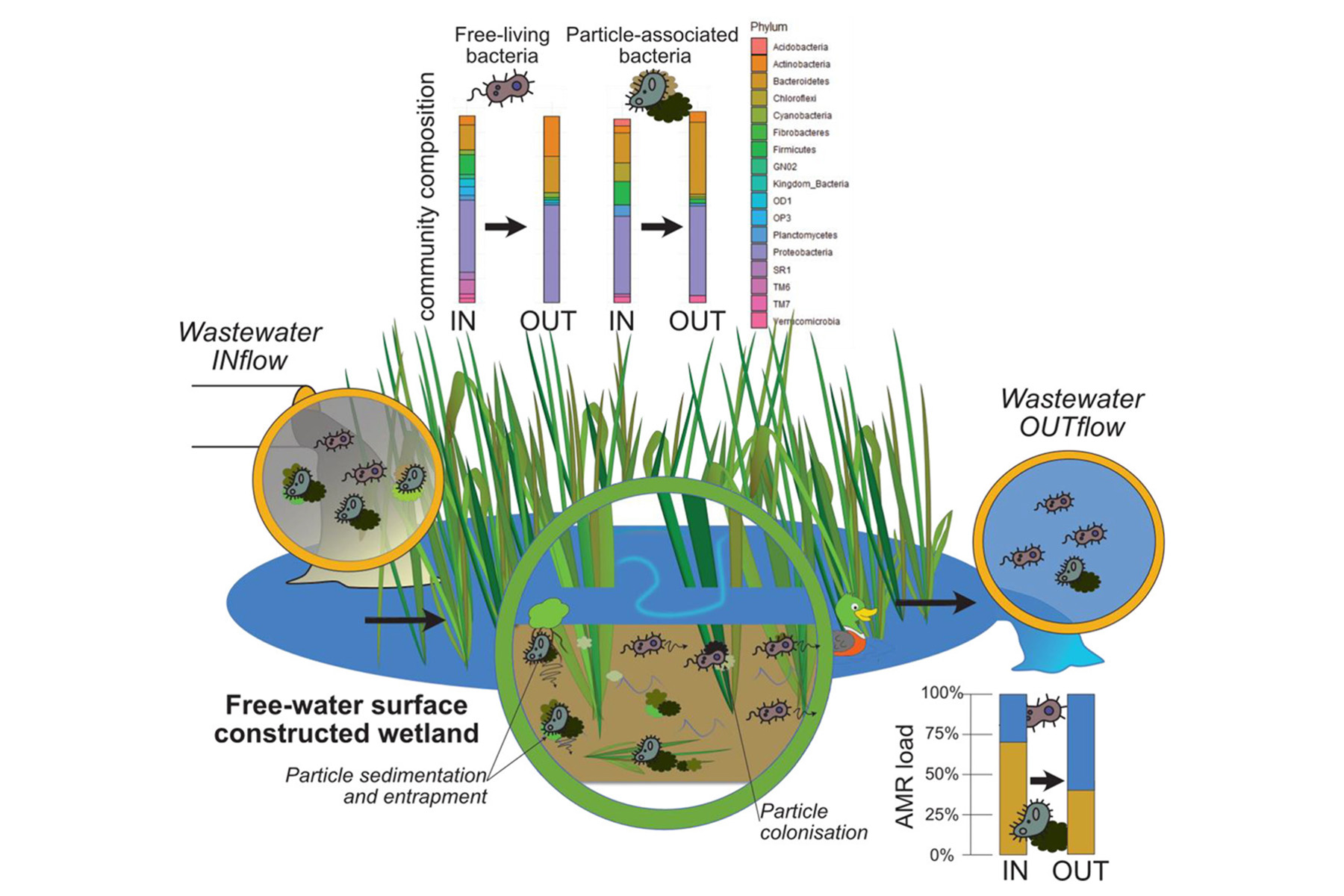
Constructed Wetlands for Cleaner Water
Investigation of microbial communities and antimicrobial resistance within multistage constructed wetlands used for wastewater treatment. The research examines how free-living and particle-associated microorganisms behave throughout the treatment process, including the retention and transport of antimicrobial resistance genes. By identifying the mechanisms influencing microbial removal and… View project Close project
Investigation of microbial communities and antimicrobial resistance within multistage constructed wetlands used for wastewater treatment. The research examines how free-living and particle-associated microorganisms behave throughout the treatment process, including the retention and transport of antimicrobial resistance genes. By identifying the mechanisms influencing microbial removal and persistence, the project supports the optimisation of nature-based wastewater treatment systems and improved protection of aquatic environments.
References
Project example
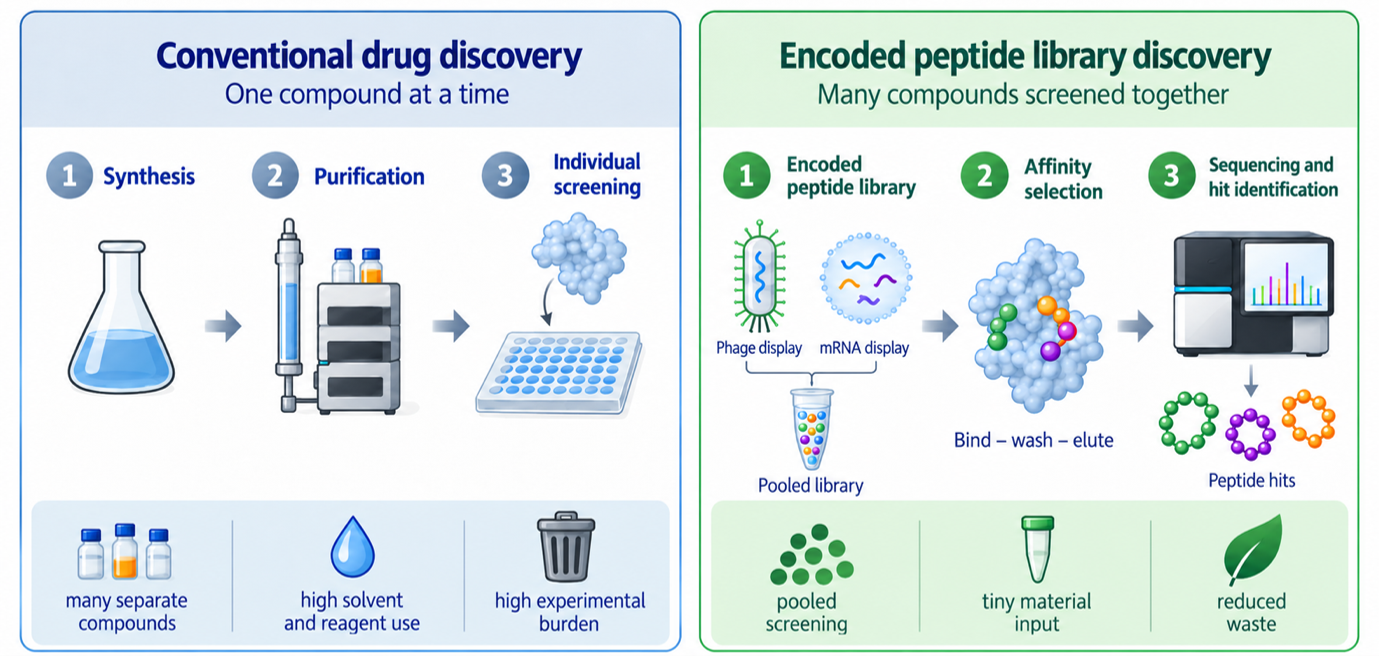
Reimagining Sustainable Drug Discovery Through Encoded Peptide Libraries
Modern drug discovery is an inherently resource-intensive process, relying on the synthesis, purification and screening of thousands of individual compounds, often consuming substantial quantities of hazardous solvents, reagents and energy. As pharmaceutical research increasingly targets challenging diseases such as cancer, there is an urgent need… View project Close project
Modern drug discovery is an inherently resource-intensive process, relying on the synthesis, purification and screening of thousands of individual compounds, often consuming substantial quantities of hazardous solvents, reagents and energy. As pharmaceutical research increasingly targets challenging diseases such as cancer, there is an urgent need to develop more efficient and sustainable approaches to identifying new medicines. Our research addresses this challenge by exploiting encoded peptide libraries, which enable millions to billions of structurally diverse molecules to be generated and screened simultaneously using exceptionally small quantities of material.
We are particularly interested in combining genetically encoded peptide technologies, including phage and mRNA display, with synthetic chemistry to discover macrocyclic peptides that selectively recognise disease-associated proteins. By encoding molecular diversity and using biological selection to identify promising candidates, we can dramatically reduce the need for conventional compound synthesis and individual screening experiments. We further integrate innovative chemical strategies to introduce reactive functional groups, enabling the discovery of covalent inhibitors with improved potency and selectivity. Our ambition is to fundamentally rethink early-stage drug discovery, combining biotechnology and chemical innovation to accelerate the development of next-generation therapeutics while reducing chemical consumption, waste generation and the environmental footprint of pharmaceutical research.
References
- “Beyond the Catalytic Serine: Selective Protease Engagement with Covalent Macrocyclic Activity-Based Probes” Chem. Sci. 2026.
- “Identification of Covalent Cyclic Peptide Inhibitors Targeting Protein-Protein Interactions Using Phage Display” J. Am. Chem. Soc. 2025, 147, 7461.
- “Identification of Highly Selective Covalent Inhibitors by Phage Display” Nat. Biotechnol. 2021, 39, 490.
- “A Suite of Activity-Based Probes To Dissect the KLK Activome in Drug-Resistant Prostate Cancer” J. Am. Chem. Soc. 2021, 143, 8911.
Project example
Self-Assembled Molecular and Nanomaterial Platforms for Healthcare, Biosensing and Bioimaging
Research in Pascu Group aims develop functional molecules and nanomaterials that combine inorganic chemistry, molecular recognition and advanced imaging to investigate biological processes and address challenges in healthcare and environmental sensing. Our research is driven by the design and synthesis of molecular systems with optical,… View project Close project
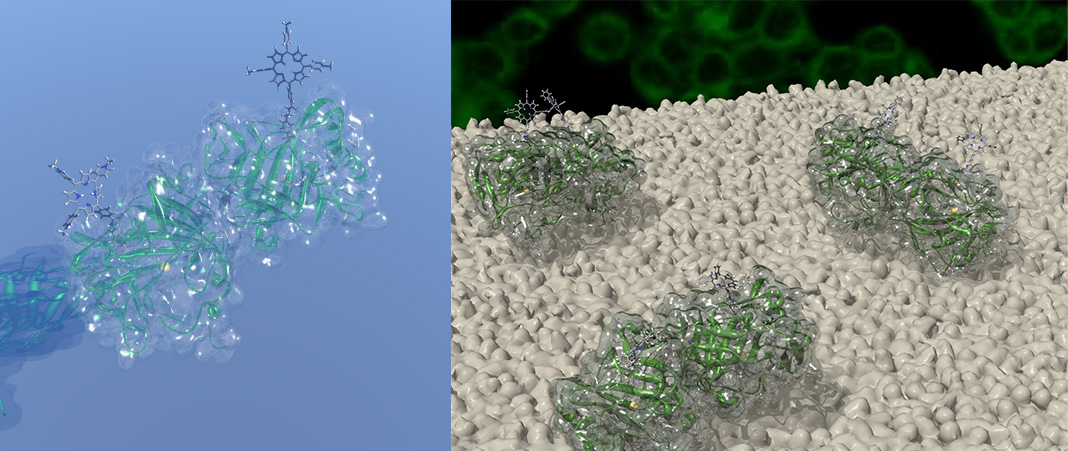
Research in Pascu Group aims develop functional molecules and nanomaterials that combine inorganic chemistry, molecular recognition and advanced imaging to investigate biological processes and address challenges in healthcare and environmental sensing. Our research is driven by the design and synthesis of molecular systems with optical, electronic and biological properties that can be controlled through metal ion coordination, supramolecular interactions and nanoscale organisation and provide tools for sustainable drugs discovery, including future theranostics. Our research interest includes chemically programmable molecules and materials that translate molecular recognition and self-assembly into measurable biological and environmental responses, providing new tools for understanding complex systems and developing next-generation sensing and imaging technologies.
We design fluorescent and phosphorescent probes to investigate biologically important metal ions, including copper, iron and zinc, and their interactions with cellular environments and metalloenzymes. A central theme is the development of metals in medicine and nanomedicine, self-assembled peptides, peptide-functionalised carbon nanomaterials and hybrid metal-containing architectures. Biorthogonal and conjugated peptides offer versatile recognition and assembly motifs, enabling the organisation of functional molecules into nanostructures with tailored biological interactions. Their integration with metal complexes and fluorescent dyes and incorporation onto graphene oxide, carbon nanotubes and Au-electrodes provide opportunities to develop multifunctional platforms for molecular delivery, imaging and biosensing. These functional carbon nanomaterials aim to capture, recognise or detect environmentally relevant molecular species, connecting molecular sensing with broader sustainability challenges.
By combining synthetic coordination chemistry with fluorescence lifetime imaging microscopy (FLIM), phosphorescence lifetime imaging microscopy (PLIM), electrochemical biosensing and complementary analytical methods, we aim to monitor molecular processes with spatial and temporal resolution. Our studies extend from the synthesis and characterisation of molecular probes to their investigation in living cells and zebrafish models, with close collaborations in Life Sciences (Professor Charareh Pourzand and Dr David Gurevich) and Electronic Engineering (Professor Pedro Estrela). Systems-focussed applications include sensing and imaging of cancer-associated biomarkers, unravelling cellular redox chemistry, tools for molecular recognition and the development of responsive imaging and theranostic systems.
References
- “Functional D- and L-Naphthalenediimide-Peptides: Microwave-Driven Synthesis, Supramolecular Aggregation and Multiphoton Fluorescence Lifetime Imaging Microscopy in Living Cells” ACS Bio Med. Chem. Au 2025, 5, 947.
- “Thermally Reduced Graphene Oxide Nanohybrids of Chiral Functional Naphthalenediimides for Prostate Cancer Cells Bioimaging” Adv. Funct. Mater. 2016, 26, 5641.
- “Carbohydrate-Mediated Cellular Uptake of Boronic Acid Hybrids In Cellulo and Insulin-Deficient Zebrafish: Live Imaging and Application of Multiphoton FLIM” Adv. Sci. 2026, e77481.
- “Behavior of Supramolecular Assemblies of Radiometal-Filled and Fluorescent Carbon Nanocapsules In Vitro and In Vivo” Chem 2017, 3, 437.
- “Mitochondria and Neuromast Tagging with Fluorescent Gallium-Triapine Analogues: In Cellulo MP-FLIM and Zebrafish Live Imaging” Adv. Sci. 2026, e19815.
Project example
Build, Diversify, Screen: Sustainable Routes for Enhanced Peptide Drug Discovery
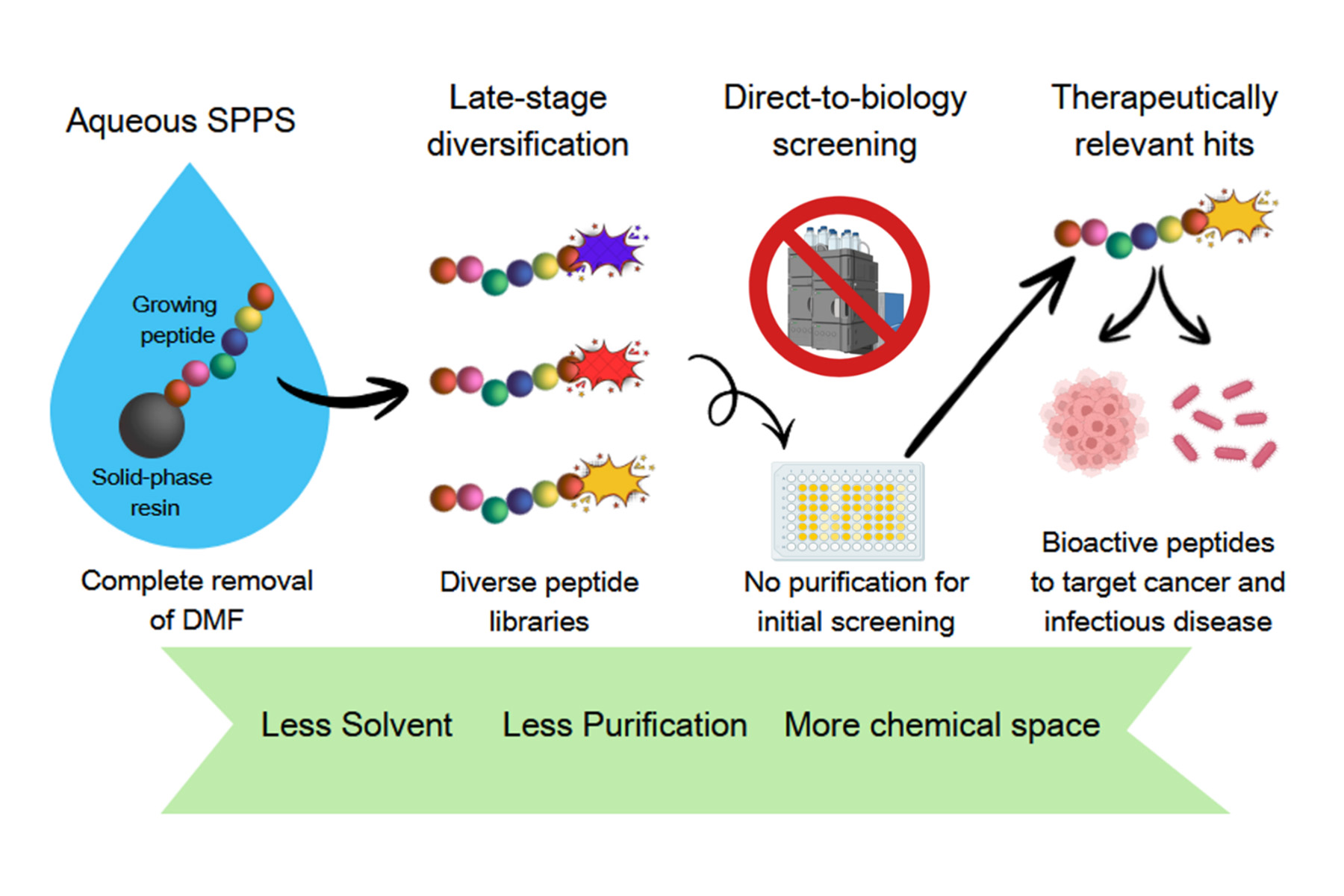
Peptides are an increasingly important modality in drug discovery, but their production remains resource-intensive, relying on energy-demanding synthesis, large volumes of hazardous solvents and reagents, and non-recyclable polymer resins. We are developing more sustainable discovery workflows built around aqueous solid-phase peptide synthesis, coupled with late-stage… View project Close project

Peptides are an increasingly important modality in drug discovery, but their production remains resource-intensive, relying on energy-demanding synthesis, large volumes of hazardous solvents and reagents, and non-recyclable polymer resins. We are developing more sustainable discovery workflows built around aqueous solid-phase peptide synthesis, coupled with late-stage diversification. Where existing chemistry is not suitable, we develop new aqueous functionalisation methods to introduce structural constraints, reactive groups and other features that expand peptide function without requiring each analogue to be resynthesised from scratch.
We then connect synthesis directly with biological testing. Rather than purifying every library member before evaluation, direct-to-biology approaches allow crude or minimally processed peptides to be screened for relevant biological activity, with purification and detailed characterisation focused on the most promising hits. This reduces solvent use, material consumption and unnecessary synthetic effort while allowing larger areas of peptide chemical space to be explored.
We combine aqueous solid-phase synthesis and functionalisation chemistry with direct biological screening to discover molecules with useful activity in cancer and infectious disease, designing sustainability into the discovery process without compromising the chemical diversity, biological function or translational potential needed to generate credible starting points for new medicines.
Facilities and capabilities
Biotechnology and Bioimaging
Researchers working across Health and Environment benefit from access to specialist biotechnology and imaging facilities at the University of Bath. These provide capabilities in protein expression, purification and analysis, alongside advanced light and electron microscopy, fluorescence imaging and flow cytometry. Together, these techniques enable the investigation of biological structures, cellular processes and molecular interactions, supporting research into human health, environmental systems and the development of innovative biological technologies.
Chemical Analysis and Characterisation
The theme is further supported by the University’s specialist chemical characterisation facilities, providing techniques for identifying, measuring and understanding complex chemical and biological substances. Capabilities include mass spectrometry, nuclear magnetic resonance (NMR) spectroscopy and chromatography, enabling detailed analysis of molecular structures, chemical composition and interactions. These analytical approaches complement biotechnology and imaging research, supporting the investigation of processes relevant to environmental sustainability, biological systems and human health.
Meet the researchers
Professor Barbara Kasprzyk-Hordern
Chemistry
View profile›

Dr Hannah Leese
Chemical Engineering
View profile›

Dr Adam Squires
Chemistry
Dr Andrew Brennan
Life Sciences
View profile›

Andrew Watts
Carmelo Herdes Moreno
Carmen Domene

Professor Frank Marken
Chemistry
View profile›

Dr Hesam Makki
Chemical Engineering
View profile›

Dr James Taylor
Chemistry
View profile›
Professor Jody Mason
Life Sciences
View profile›

Dr Lee Bryant
Architecture and Civil Engineering
View profile›
Manuchehr Soleimani
Dr Maria Shchepinova
Chemistry
View profile›

Dr Melusine Pigeon
Electrical Engineering
View profile›

Professor Mirella Di Lorenzo
Chemical Engineering
View profile›

Dr Paul De Bank
Life Sciences
View profile›
Professor Pedro Estrela
Electrical Engineering
View profile›
Pedro Estrela
Dr Roman Fedoryshchak
Life Sciences
View profile›
Sandhya Moise
Dr Simon Tang
Life Sciences
View profile›
Professor Sofia Pascu
Chemistry
View profile›

Professor Tony James
Chemistry
View profile›Interested in this research theme?
Connected research
Explore our research themes
Our six research themes are distinct but interconnected, combining expertise across disciplines to address complex sustainability challenges.