
Digitalisation and Modelling
The Digitalisation & Modelling theme uses computational, data-driven and machine learning methods to accelerate the discovery, design and optimisation of sustainable chemical processes and materials. We address the challenge of predicting chemical behaviour before committing time, materials and energy to the lab: building models that capture reaction mechanisms, molecular properties and process dynamics, and using data to guide synthesis, screening and scale-up decisions. Our goal is not simply to simulate existing chemistry, but to make digital tools an integral part of how sustainable chemical technologies are designed and delivered.
Key research areas within this theme

Catalysis

Synthesis

Bio

Reaction

Process
Research in practice
Exemplar projects
Explore examples of the interdisciplinary research students could undertake within this theme.
Project example
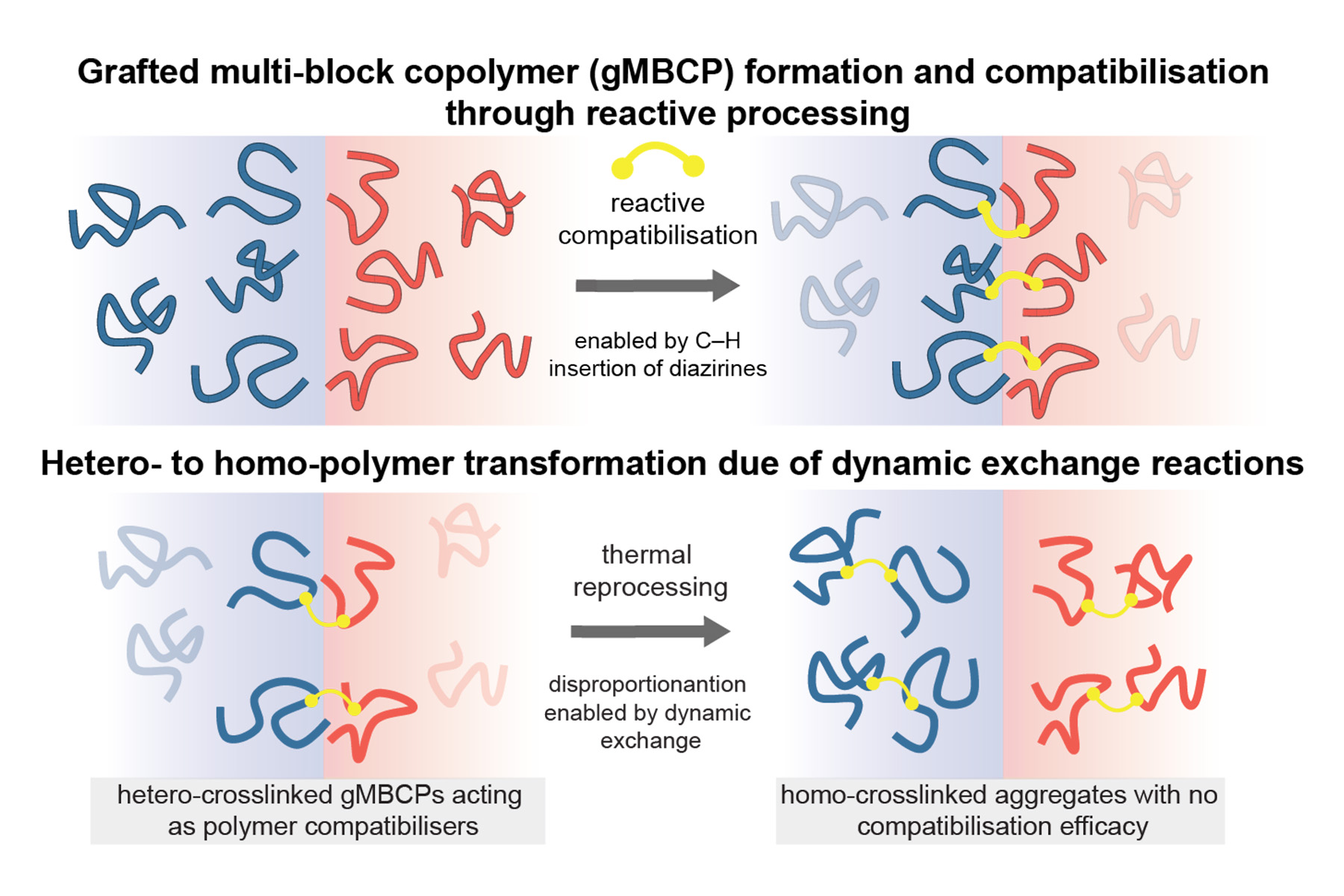
Designing Additives for Mixed Plastic Recycling
Our research develops simulation methods that model chemical reactions as they happen inside a polymer melt, with the aim of designing the additives needed to recycle mixed plastic waste. Different plastics do not mix, so recycling them together requires small molecules that stitch the two… View project Close project
Our research develops simulation methods that model chemical reactions as they happen inside a polymer melt, with the aim of designing the additives needed to recycle mixed plastic waste. Different plastics do not mix, so recycling them together requires small molecules that stitch the two materials to one another during processing — but a molecule that works for one pair of plastics often fails for another. We are particularly interested in the competition between how quickly these molecules move through the melt and how quickly they react, which determines whether they end up in the right place to do their job, and in turning that understanding into quantities that can be computed fast enough to screen thousands of candidate chemistries. More broadly, we aim to make these additives designable rather than discovered by trial and error, with machine learning proposing new candidates that are then synthesised and tested. The example shown illustrates this approach for a blend of two common plastics, where a single added molecule transforms a brittle, easily separated material into one that holds together under stretching.
View full-size image for Developing Reactions in the Loop: Machine Learning-Guided Flow Chemistry
02
Project example
Developing Reactions in the Loop: Machine Learning-Guided Flow Chemistry
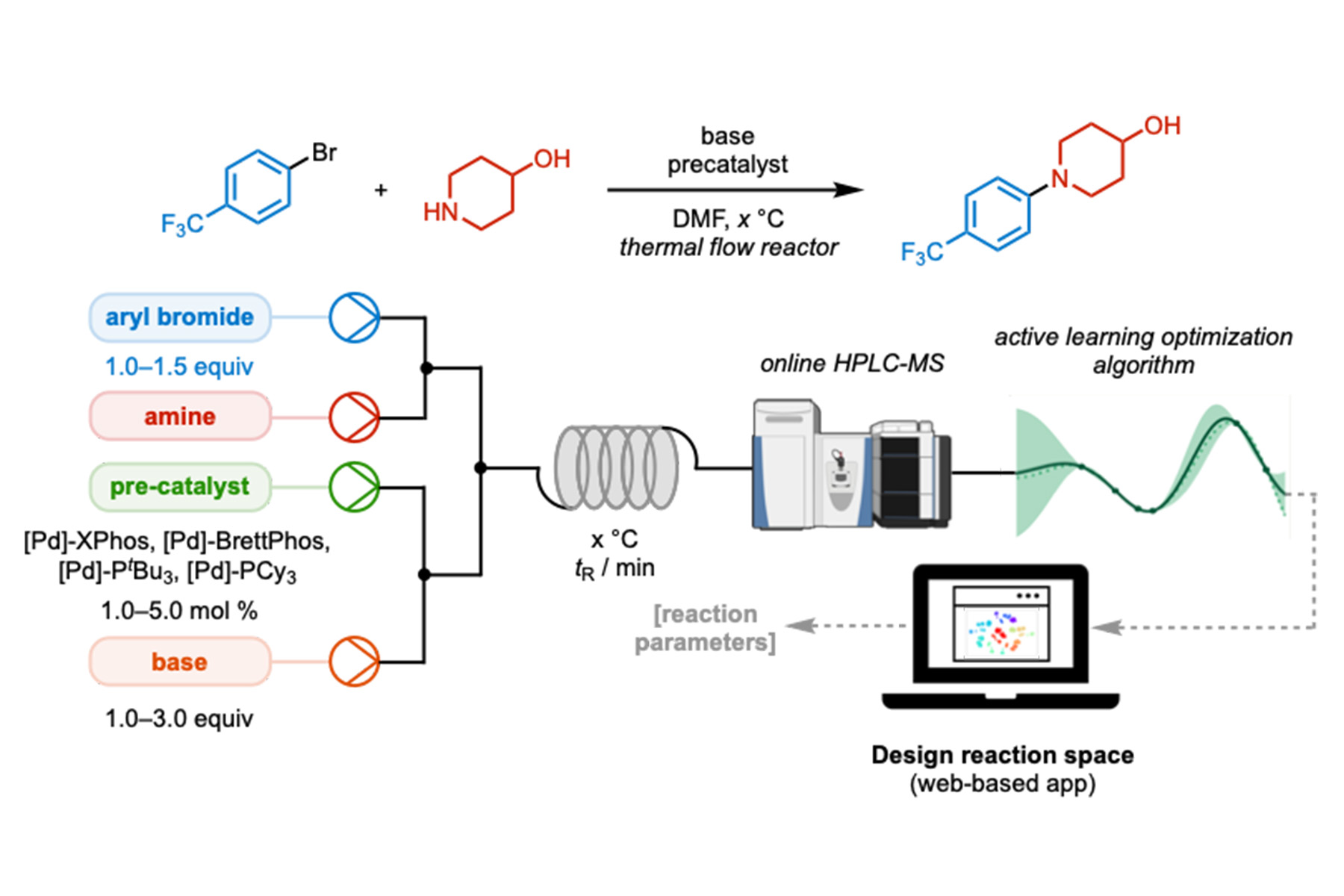
Our research develops automated experimentation platforms that combine continuous-flow chemistry with machine learning-guided optimization to accelerate the discovery and understanding of new chemical reactions. We are particularly interested in integrating flow reactors with in-line analytical techniques and active-learning algorithms, allowing the outcome of each experiment… View project Close project
Our research develops automated experimentation platforms that combine continuous-flow chemistry with machine learning-guided optimization to accelerate the discovery and understanding of new chemical reactions. We are particularly interested in integrating flow reactors with in-line analytical techniques and active-learning algorithms, allowing the outcome of each experiment to guide the design of the next and enabling efficient exploration of complex, multidimensional reaction spaces. More broadly, we aim to establish self-optimizing flow as a practical tool for developing new synthetic methodology, not merely for optimizing reactions whose conditions are already known. The example shown illustrates this approach through the optimization of a challenging reaction system, where systematic exploration of reaction conditions is used both to identify effective conditions and to reveal the factors that govern reaction performance.
Project example
Designing Drug Carriers by Simulation
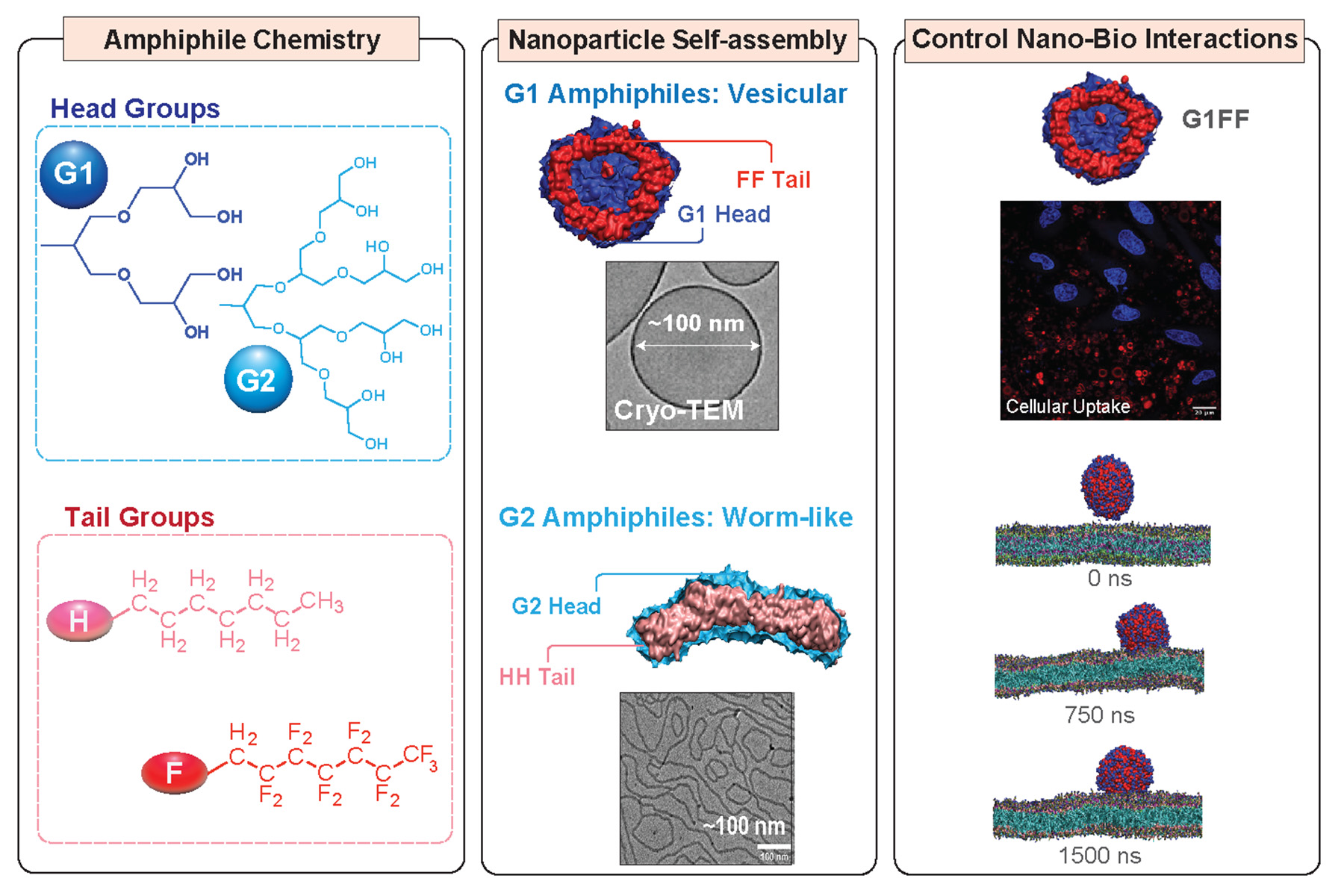
Our research develops molecular simulation approaches that link the chemistry of individual molecules to the behaviour of the nanoparticles they assemble into, with the aim of designing drug carriers before they are made. We are particularly interested in calculating simple energetic quantities that predict what… View project Close project
Our research develops molecular simulation approaches that link the chemistry of individual molecules to the behaviour of the nanoparticles they assemble into, with the aim of designing drug carriers before they are made. We are particularly interested in calculating simple energetic quantities that predict what a loaded nanoparticle will do when it meets a cell membrane — whether it stays intact, dissolves into the membrane, or releases its cargo first — allowing large numbers of candidate chemistries to be ranked quickly and the most promising few to be examined in atomistic detail. More broadly, we aim to establish molecular design as a practical route to programmable drug release, not merely as a way of explaining the behaviour of carriers that already exist. The example shown illustrates this approach for fluorinated nanocarriers, where small changes in molecular structure are used both to control the shape of the particle and to select the mechanism by which it delivers its cargo.
Project example
Intelligent Polymers: From Spectral Fingerprints to Performance and Adaptive Manufacturing
What if a polymer could tell us how it will behave before we test or process it? This project explores how infrared spectroscopy and artificial intelligence can turn the chemical fingerprint of a polymer into predictions of its properties, performance and optimal processing conditions. Rather… View project Close project
What if a polymer could tell us how it will behave before we test or process it?
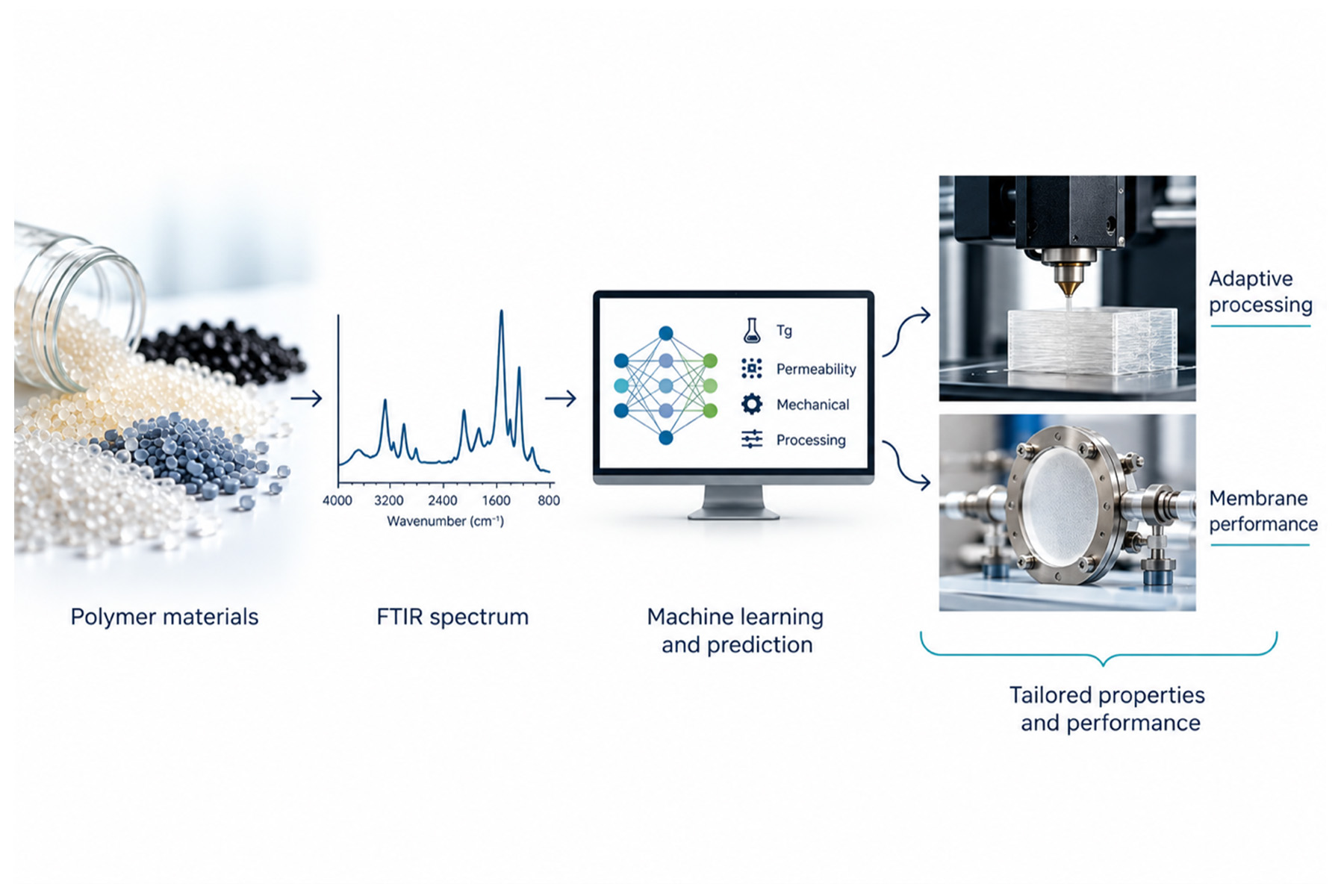
This project explores how infrared spectroscopy and artificial intelligence can turn the chemical fingerprint of a polymer into predictions of its properties, performance and optimal processing conditions. Rather than representing a material only by its idealised chemical structure, we use its measured FTIR spectrum, allowing the models to capture real differences arising from additives, impurities, composition and processing history.
We have already demonstrated this concept in two very different applications. In Infrared-Driven Polymer Intelligence, machine learning predicted polymer glass-transition temperature directly from infrared spectra with an R² of 0.94. The predictions were then incorporated into a 3D-printing workflow capable of adapting processing temperatures in response to changes in the material being used.
More recently, we showed that the same principle can be extended to membrane performance. FTIR spectra can be used to predict the permeability of polymers to six industrially relevant gases, including CO₂, H₂ and CH₄, allowing promising membrane materials to be screened in minutes before undertaking more time-consuming permeation experiments. Importantly, the spectral regions identified by the models correspond to meaningful polymer chemistry, including chain packing, backbone polarity and interactions with CO₂.
The next step is to create a broader platform for intelligent and adaptive polymer processing. Future projects could investigate whether spectral fingerprints can simultaneously predict thermal, transport, mechanical and processing behaviour, and ultimately create manufacturing systems that sense the material entering a process, predict how it will behave, and automatically adapt how it is processed.
This approach could be particularly powerful for recycled, bio-derived and circular polymer feedstocks, where composition and properties naturally vary between batches. Instead of demanding perfectly uniform raw materials, intelligent processing could allow manufacturing systems to recognise and respond to that variability, helping make circular materials easier to use at scale.
References
Project example
Understanding Perovskite Solar Cell Degradation with the aid of machine learning
Perovskite solar cells (PSCs) boast high power conversion efficiencies, comparable to silicon, while their manufacture is cheaper and more sustainable. Applications such as indoor photovoltaics and flexible solar cells are well suited to this technology. Although PSC modules are in production, stability concerns limit their… View project Close project
Perovskite solar cells (PSCs) boast high power conversion efficiencies, comparable to silicon, while their manufacture is cheaper and more sustainable. Applications such as indoor photovoltaics and flexible solar cells are well suited to this technology.
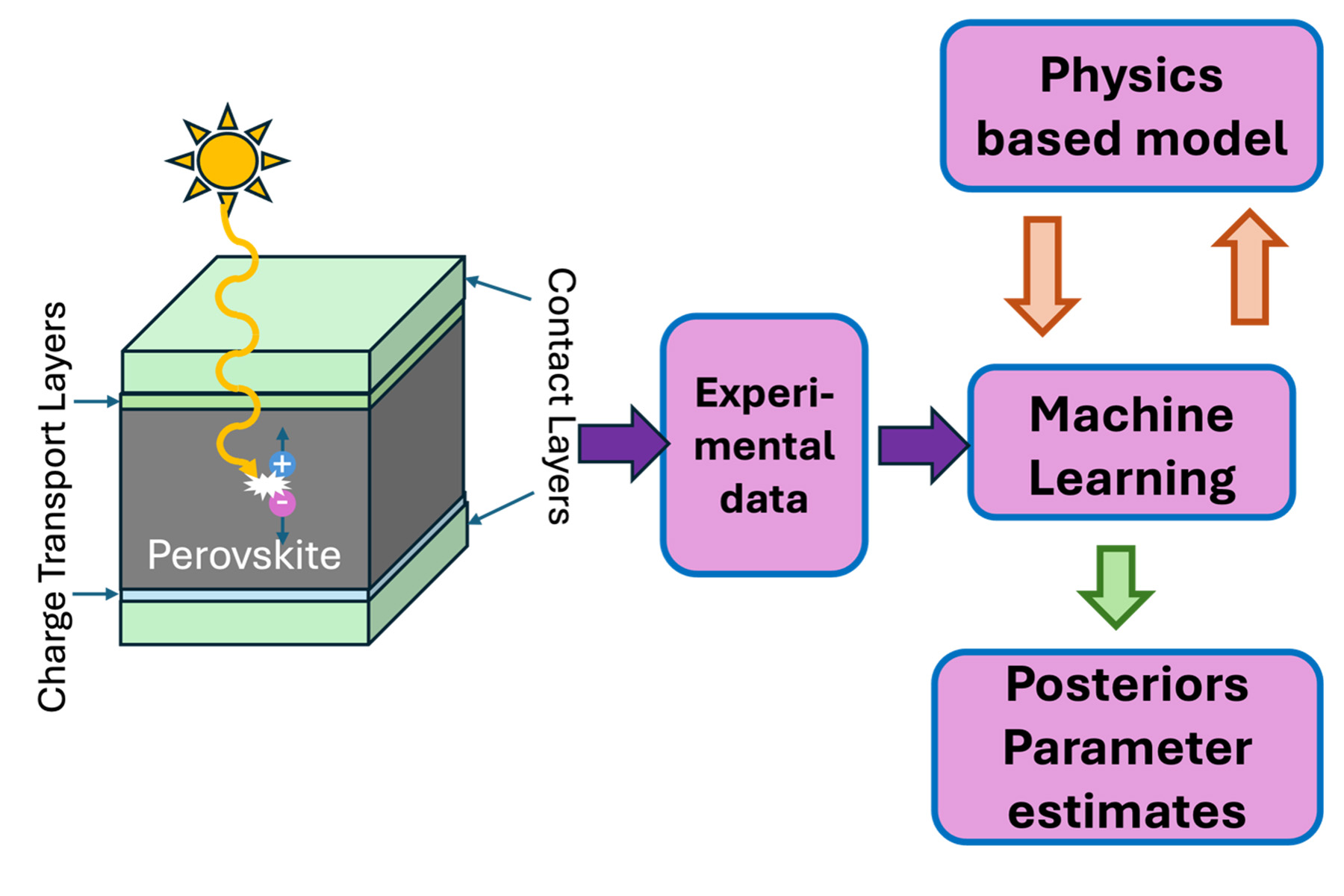
Although PSC modules are in production, stability concerns limit their uptake. Another problem is that most PSC perovskites contain lead which can leach from damaged or degraded cells. Lead can be replaced by tin, but at the cost of increasing cell degradation. PSC perovskites suffer from a high concentration of defects. When the PSC is illuminated and passing a current, some defects, particularly iodide vacancies, move through the perovskite layer due to iodide ions moving between the vacant sites. These mobile defects influence material and device properties in unexpected and intriguing ways, making experimental measurements on PSCs difficult to interpret.
Establishing the causes of underperformance is complex and time-consuming. This project will investigate causes of degradation and establish potential mitigation routes that reduce degradation such as identifying stable and sustainable perovskite compositions. Our recent work has shown that combining machine learning with device and materials simulation methodologies can address this problem1. In this project, data from measurements made by groups in Rome, Amsterdam and in published work will be interpreted by our models. We will test hypotheses on the physical processes responsible for degradation, such as defects piling up at interfaces between layers.
References
Facilities and capabilities
High-performance computing resources
Opentrons OT-2 robot
The Opentrons OT-2 is an open-source liquid handling robot that automates pipetting tasks with high precision and reproducibility. It reduces manual error and enables scalable, high-throughput experiment, work-up or analysis workflows using standard labware.
Meet the researchers
Dr Jamie Cadge
Chemistry & Chemical Engineering
View profile›

Dr Hesam Makki
Chemical Engineering
View profile›

None Alessandro Leronni
Mechanical Engineering
View profile›

Dr Alexander O'Malley
Chemistry
View profile›
Professor Alison Walker
Physics
View profile›

Dr Andreas Phanopoulos
Chemistry
View profile›

Dr Bernardo Dominguez
Chemical Engineering
View profile›

Dr Carmelo Herdes Moreno
Chemical Engineering
View profile›

Professor Carmen Domene
Chemistry
View profile›

Dr Claire McMullin
Chemistry
View profile›
Professor John Bower
Chemistry
View profile›

Professor Manuchehr Soleimani
Electrical Engineering
View profile›

Dr Matthew Grayson
Chemistry
View profile›

Dr Sourav Chatterjee
Chemical Engineering
View profile›

Professor Tina Düren
Chemical Engineering
View profile›
Dr Yang Chen
Mechanical Engineering
View profile›Interested in this research theme?
Connected research
Explore our research themes
Our research themes are distinct but interconnected, combining expertise across disciplines to address complex sustainability challenges.